
Tankless Water Heater Repair and Replacement in Denver, CO
Sewer Lines Plus diagnoses, repairs, and replaces tankless water heaters for residential properties across the Denver metro area. A tankless unit that stops producing hot water, displays an error code, or cycles on and off needs professional diagnosis to identify the failed component and determine whether repair or replacement delivers the best value.
Denver conditions accelerate tankless water heater failures faster than most markets. Hard water at 15 to 20 grains per gallon deposits mineral scale inside the heat exchanger every 12 to 18 months. Altitude at 5,280 feet affects gas combustion and can trigger ignition errors on units not calibrated for elevation. Cold winter inlet temperatures (40F to 50F) increase thermal cycling stress on internal components.
Every tankless repair begins with a free estimate, a written diagnosis, and clear communication about repair vs replacement options. Our estimators are not paid on commission and recommend only necessary work.
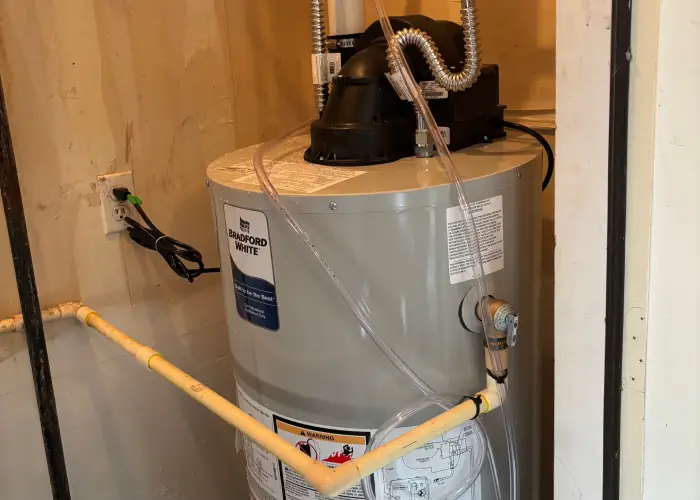
Common Tankless Water Heater Problems
Tankless water heaters produce specific symptoms when components fail. Each symptom points to a different root cause. Identifying the symptom and reading the error code narrows the diagnosis and determines the correct repair.
No hot water
The unit does not ignite when a fixture opens. Causes include a failed ignition module, gas supply interruption, clogged gas inlet filter, or a tripped electrical breaker. On electric tankless units, a burned out heating element or tripped high limit switch produces the same result.
Heat exchanger scale buildup
Denver hard water at 15 to 20 GPG deposits calcium carbonate inside the heat exchanger. Scale restricts water flow, reduces heat transfer, and forces the unit to work harder. Each 1/16 inch of scale reduces heating efficiency by 10% to 12%. Without annual descaling, scale buildup triggers overheating errors and eventually cracks the heat exchanger.
Ignition failure
The unit attempts to ignite but fails after multiple tries and locks out. Causes include a fouled flame rod sensor, insufficient gas pressure, blocked exhaust vent, or a faulty ignition module. Denver altitude affects gas pressure delivery and combustion air density, which can contribute to ignition errors on units not altitude calibrated.
Flame rod sensor fouling
The flame rod detects the presence of a flame after ignition. Carbon buildup on the rod prevents it from sensing the flame, causing the unit to shut down as a safety measure. Flame rod cleaning or replacement restores ignition.
Flow sensor malfunction
The flow sensor detects water movement to activate the burner. A stuck or corroded flow sensor fails to register water flow, preventing the unit from igniting. Mineral deposits from Denver hard water are the primary cause of flow sensor failure.
Cold water sandwich
A brief burst of cold water between back to back hot water draws. This occurs when residual heated water in the pipes is followed by unheated water before the burner reignites. Units with recirculation systems reduce or eliminate this issue.
Exhaust or venting blockage
Bird nests, ice, debris, or improper vent termination blocks exhaust flow. The unit detects restricted exhaust and shuts down to prevent carbon monoxide buildup. Vent inspection and clearing restores function.
PCB board failure
The printed circuit board controls all electronic functions: ignition sequencing, temperature regulation, error code display, and safety shutdowns. A failed PCB board produces erratic behavior or a completely unresponsive unit. PCB replacement restores full function on units with otherwise healthy components.

Tankless Water Heater Error Code Diagnostics
Tankless water heaters display error codes on the digital control panel when a failure is detected. Each brand uses its own code numbering system, but the failure categories are consistent across Rinnai, Navien, Noritz, and Rheem units. The table below maps common error categories to their root cause and repair action.
Error Category | What It Means | Typical Repair |
Ignition Failure | Unit attempted ignition but no flame detected after multiple tries | Clean or replace flame rod, verify gas supply and pressure, check ignition module |
Flame Loss | Flame detected at ignition but lost during operation | Inspect gas pressure stability, check vent for blockage, verify combustion air supply |
Exhaust Blockage | Restricted exhaust airflow detected by pressure switch or thermistor | Clear vent termination, remove debris, verify vent run length and diameter |
Overheating | Outlet water temperature exceeds safe limit | Descale heat exchanger, verify flow rate, check flow sensor operation |
Flow Error | No water flow detected or flow below minimum activation threshold | Clean or replace flow sensor, check inlet filter, verify water supply pressure |
Scale Detection | Unit detects reduced heat transfer indicating mineral buildup | Descale heat exchanger with food grade descaling solution, flush system |
Sewer Lines Plus diagnoses error codes on all major tankless brands including Rinnai, Navien, Noritz, and Rheem. Our plumbers read the error log, test individual components, and trace the root cause to the specific part that triggered the code.
Tankless Water Heater Descaling in Denver
Descaling is the single most important maintenance repair for tankless water heaters in Denver. Hard water at 15 to 20 GPG deposits calcium carbonate inside the heat exchanger every 12 to 18 months. Without descaling, scale buildup reduces flow rate, triggers overheating error codes, and eventually cracks the heat exchanger, which is the most expensive component in the unit.
The descaling process involves isolating the unit using service valves, circulating a food grade descaling solution (white vinegar or commercial descaler) through the heat exchanger for 45 to 60 minutes, flushing the system with clean water, and testing output temperature and flow rate at all fixtures. Descaling restores heating efficiency and flow rate to manufacturer specifications.
For homes with water hardness above 20 GPG or homes without a water softener, descaling every 6 to 9 months prevents scale related failures. Learn more about water heater maintenance and flushing in Denver.
Repair vs Replacement for Tankless Water Heaters
Tankless units last 15 to 20 years, so the replacement threshold is different from tank water heaters. The decision depends on the failed component, unit age, repair cost, and parts availability.
| Factor | Repair | Replace |
| Unit Age | Under 10 years old | Over 12 to 15 years old |
| Failed Component | Flame rod, flow sensor, ignition module, thermostat, PCB board | Cracked or corroded heat exchanger |
| Repair Cost vs Replacement | Repair under 40% of new unit installed cost | Repair exceeds 40% of new unit installed cost |
| Repair Frequency | First repair in 24 months | Multiple repairs within 12 months |
| Parts Availability | OEM parts readily available | Parts discontinued or backordered (unit over 12 to 15 years) |
Heat exchanger replacement is the critical decision point. A cracked or corroded heat exchanger costs nearly as much as a new unit installed. On a unit over 10 years old, replacement is the stronger financial decision. On a unit under 8 years old, heat exchanger replacement may be covered under the manufacturer warranty (typically 10 to 12 year heat exchanger warranty).
Homeowners replacing a tankless unit can learn more about tankless water heater installation in Denver. For homeowners considering upgrading to a higher efficiency system, see high efficiency water heater upgrades.
Benefits of Professional Tankless Water Heater Repair
Professional diagnosis identifies the exact component failure and determines whether repair or replacement delivers the best long term value.
- Accurate Error Code Diagnosis. Licensed plumbers read the error log, test individual components with manufacturer diagnostic tools, and isolate the root cause. Accurate diagnosis prevents replacing parts that are still functional and identifies failures that a reset alone will not fix.
- Restored On Demand Hot Water. Component repair restores continuous hot water delivery at the rated flow rate. A properly repaired tankless unit produces the same output as the day it was installed.
- Extended Equipment Lifespan. Descaling, flame rod cleaning, and flow sensor replacement keep the unit operating within manufacturer specifications. Regular component maintenance extends tankless lifespan to the full 15 to 20 year design life.
- Prevented Heat Exchanger Failure. Annual descaling prevents scale from cracking the heat exchanger, which is the most expensive tankless component. Preventing heat exchanger failure avoids a $1,500 to $2,500+ repair or premature full unit replacement.
- Safety Verification. Gas tankless repair includes a gas leak check at all connections, combustion air verification, and exhaust venting inspection. These safety checks confirm the unit operates without carbon monoxide or gas leak risk.
Our Tankless Repair and Replacement Process
Sewer Lines Plus follows a diagnostic first process on every tankless water heater repair. Our estimators are not paid on commission, and we present repair and replacement options side by side so homeowners make an informed decision.
Schedule a no wait appointment
Contact our team by phone or online form. Describe the symptoms or error code so we arrive prepared with diagnostic tools and common replacement parts.
Error code reading and diagnostic inspection
A licensed plumber reads the error log, tests the flame rod, flow sensor, ignition module, heat exchanger, gas pressure, and venting. We document every finding and identify the root cause.
Free estimate with repair and replacement options
We present a written estimate with repair cost and replacement cost side by side. We walk through the diagnosis, explain what failed and why, and recommend the option that delivers the best value based on unit age and component condition. No pressure, no gimmicks
Execute the approved service
Our plumber completes the component repair, descaling, or installs the replacement unit. Only approved work is completed. Replacement includes old unit removal and recycling at no extra charge
Post service testing and error code clearance
We test hot water delivery at every fixture, verify flow rates, check for gas leaks, confirm error codes are cleared, and ensure the system operates within manufacturer specifications before leaving.
Why Denver Homeowners Choose Sewer Lines Plus
Our tagline is “ethics matter.” That philosophy shows in how we diagnose, estimate, and complete every tankless water heater repair.
Free Estimates and Second Opinions
Every tankless repair begins with a free on site estimate. Homeowners who received a quote from another company receive a free second opinion with a detailed written comparison.
Over 800 Five Star Reviews
Denver metro homeowners have left over 800 verified five star reviews based on transparent pricing, clear communication, and honest repair vs replacement recommendations.
No Pressure Sales
Our estimators are not paid on commission. They diagnose the failure, present repair and replacement options side by side, and recommend only necessary work. We never push a replacement when a repair restores full function.
Licensed and Fully Insured
Every plumber on our team is licensed and covered by general liability and workman’s compensation insurance.
Clear Communication
We explain the error code, what component failed, why it failed, and what the repair involves. Homeowners make the decision with full information, not sales pressure.
No Wait Appointments
We schedule specific appointment windows so homeowners are not waiting around for a technician.
Schedule Tankless Water Heater Repair in Denver, CO
Contact Sewer Lines Plus to schedule a no wait appointment for tankless water heater repair or replacement. Call [phone number] or complete our online form to receive a free estimate with transparent pricing, no pressure sales, and licensed repair backed by over 800 five star reviews. For tank water heater issues, learn more about water heater repair and replacement in Denver.
Tankless Water Heater Repair FAQs
How much does tankless water heater repair cost in Denver?
Tankless water heater repair in Denver ranges from $200 to $600 for most component repairs including flame rod cleaning, flow sensor replacement, ignition module replacement, and thermostat recalibration. Descaling costs $150 to $300. Heat exchanger replacement ranges from $1,500 to $2,500.
Why is my tankless water heater showing an error code?
Error codes indicate a specific component failure or safety condition. Common causes include ignition failure, flame rod fouling, heat exchanger scale, flow sensor malfunction, or exhaust blockage. A licensed plumber reads the error log and tests each component to identify the root cause.
How often should a tankless water heater be descaled in Denver?
Denver hard water at 15 to 20 GPG requires annual descaling. Homes with water hardness above 20 GPG or without a water softener should descale every 6 to 9 months. Descaling removes mineral scale from the heat exchanger and restores heating efficiency and flow rate.
Can a tankless water heater be repaired or does it need replacement?
Most tankless failures involve replaceable components (flame rod, flow sensor, ignition module, PCB board) and are repairable. Replace when the heat exchanger is cracked, repair cost exceeds 40% of a new unit, or the unit is over 12 to 15 years old with discontinued parts.
What is the most common tankless water heater problem in Denver?
Heat exchanger scale buildup from Denver hard water is the most common problem. Scale reduces flow rate, decreases efficiency by 10% to 12% per 1/16 inch of buildup, and triggers overheating error codes. Annual descaling prevents scale related failures.
What brands of tankless water heaters does Sewer Lines Plus repair?
We diagnose and repair all major tankless brands including Rinnai, Navien, Noritz, Rheem, and Bosch. Our plumbers carry common replacement parts for these brands on every service call.