
Water Heater Repair and Replacement in Denver, CO
Sewer Lines Plus diagnoses, repairs, and replaces water heaters for residential properties across the Denver metro area. A water heater that stops producing hot water, leaks at the base, or makes popping and rumbling sounds needs professional diagnosis to determine whether the unit requires a component repair or a full replacement.
Denver water and climate accelerate water heater failures. Hard water at 15 to 20 grains per gallon depletes anode rods 30% to 40% faster than soft water regions. Sediment hardens on the tank floor and insulates the heating element from the water, forcing the unit to run longer cycles. Cold winter inlet temperatures (40F to 50F) increase thermal stress on the tank and fittings.
Every water heater repair begins with a free estimate, a written diagnosis, and clear communication about repair vs replacement options. Our estimators are not paid on commission and recommend only necessary work.
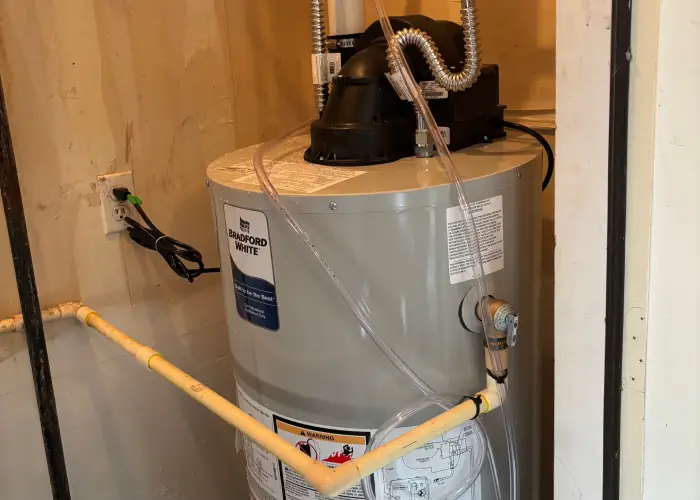
Signs Your Water Heater Needs Repair or Replacement
Water heater failures produce specific symptoms. Each symptom points to a different component failure or system condition. Identifying the symptom narrows the diagnosis and determines whether the unit needs a repair or a full replacement.
No hot water
A gas water heater with no hot water indicates a failed thermocouple, a malfunctioning gas control valve, or a pilot light that will not stay lit. An electric water heater with no hot water points to a tripped breaker, a failed thermostat, or a burned out heating element.
Water heater leaking from the bottom
A leak at the base of the tank indicates internal corrosion that has penetrated the steel lining. Tank corrosion leaks cannot be repaired. A leaking tank requires full replacement before 40 to 80 gallons of water damages flooring, drywall, and substructures.
Rusty or discolored hot water
Rusty water from hot taps only signals a corroded anode rod or active corrosion inside the tank. A depleted anode rod no longer protects the steel lining from electrochemical corrosion. Replacing the anode rod stops the corrosion when the tank lining is still intact.
Popping, rumbling, or banging sounds
Sediment that hardens on the tank floor traps water underneath. When the burner fires, trapped water converts to steam and creates popping or rumbling sounds. This condition reduces heating efficiency by 10% to 15% per inch of sediment and accelerates tank floor corrosion.
Pilot light will not stay lit
A thermocouple that no longer generates a sufficient millivolt signal causes the gas control valve to shut off fuel supply. Thermocouple replacement restores pilot light function on gas water heaters.
Inconsistent water temperature
Temperature that fluctuates between hot and cold during a single draw indicates a cracked or deteriorated dip tube. A broken dip tube allows cold inlet water to mix with heated water at the top of the tank instead of routing it to the bottom for heating.
High energy bills with no change in usage
Sediment buildup, a failing thermostat, or a degraded heating element forces the water heater to run longer cycles. Each inch of sediment on the tank floor reduces heat transfer efficiency by 10% to 15%, increasing gas or electricity consumption.
Visible corrosion on tank or fittings
Rust, green oxidation, or white mineral deposits on the tank body, inlet and outlet nipples, or supply connections indicate active corrosion. External corrosion on fittings is repairable. External corrosion on the tank body signals internal tank deterioration that leads to eventual leaks.

Common Water Heater Repairs
Six component failures account for the majority of water heater repair calls in Denver. Each repair targets a specific part that has failed due to age, Denver hard water conditions, or normal wear.
Thermocouple Replacement
The thermocouple is a safety sensor on gas water heaters that detects the pilot flame. A failed thermocouple sends no signal to the gas control valve, which shuts off fuel supply. Replacement restores pilot light function and hot water production.
Heating Element Replacement
Electric water heaters use upper and lower heating elements to heat water. A burned out element produces no hot water (upper) or insufficient hot water (lower). Denver hard water accelerates mineral scale buildup on elements, shortening their lifespan.
Anode Rod Replacement
The sacrificial anode rod protects the steel tank lining from corrosion by attracting corrosive minerals in the water. In Denver hard water (15 to 20 GPG), anode rods deplete in 3 to 4 years instead of the standard 5 year lifespan. Replacing the anode rod before full depletion extends tank life by 3 to 5 years.
Dip Tube Replacement
efore full depletion extends tank life by 3 to 5 years. Dip Tube Replacement. The dip tube routes cold inlet water to the bottom of the tank for heating. A cracked or disintegrated dip tube allows cold water to mix with hot water at the top, causing temperature inconsistency at fixtures.
TPR Valve Replacement
The temperature and pressure relief valve is a safety device that opens when tank pressure or temperature exceeds safe limits. A TPR valve that drips continuously, fails to open during a lift test, or is stuck closed requires replacement to maintain safe operation.
Thermostat Recalibration or Replacement
Gas and electric water heater thermostats regulate heating cycles and maintain the set temperature. A malfunctioning thermostat causes overheating, underheating, or continuous cycling. Recalibration or replacement restores accurate temperature control
Repair vs Replacement Decision Guide
The decision to repair or replace a water heater depends on four factors: unit age, repair cost relative to replacement cost, failure frequency, and failure type. The table below provides a clear framework.
Factor | Repair | Replace |
Unit Age | Under 8 years old | Over 8 to 10 years old |
Repair Cost vs Replacement | Repair under 50% of replacement cost | Repair exceeds 50% of replacement cost |
Repair Frequency | First repair in 12 months | Two or more repairs in 12 months |
Failure Type | Component failure (thermocouple, element, anode rod, dip tube, thermostat) | Tank leak, visible tank corrosion, or crack |
Energy Efficiency | Current UEF is adequate for household demand | Current UEF is below 0.60 and a high efficiency option is available |
The 50% rule provides the clearest guidance: when the repair cost exceeds 50% of a new unit installed, replacement is the stronger financial decision. A tank leak at the base is always a replacement, regardless of unit age, because internal tank corrosion cannot be repaired.
Homeowners replacing a water heater can learn more about new water heater installation in Denver. For homeowners considering an upgrade from standard efficiency, see high efficiency water heater upgrades.
Benefits of Professional Water Heater Repair
Professional diagnosis identifies the exact component causing the failure and determines whether repair or replacement delivers the best long term value.
- Accurate Diagnosis Prevents Unnecessary Replacement. A licensed plumber tests individual components (thermocouple, thermostat, heating element, anode rod, TPR valve) to isolate the failure. Accurate diagnosis prevents replacing a unit that only needs a $150 to $300 component repair.
- Restored Hot Water Performance. Component repair restores hot water output, temperature consistency, and recovery rate to manufacturer specifications. A repaired water heater delivers the same performance as the day it was installed
- Extended Equipment Lifespan. Replacing a depleted anode rod, flushing hardened sediment, and recalibrating the thermostat extends a water heater's functional lifespan by 3 to 5 years. These repairs cost a fraction of full replacement.
- Water Damage Prevention. A leaking fitting, dripping TPR valve, or corroded supply connection identified during a repair call prevents a full tank failure that releases 40 to 80 gallons onto floors and walls.
- Safety Verification. Gas water heater repair includes a gas leak check, combustion air verification, and flue draft test. These safety checks confirm the unit operates without carbon monoxide or gas leak risk.
Our Repair and Replacement Process
Sewer Lines Plus follows a diagnostic first process on every water heater repair call. Our estimators are not paid on commission, and we present repair and replacement options side by side so homeowners make an informed decision.
Schedule a no wait appointment
Contact our team by phone or online form. Describe the symptoms (no hot water, leaking, noise, discolored water) so we arrive prepared with the right diagnostic tools and common replacement parts.
On site diagnostic inspection
A licensed plumber inspects every water heater component: thermocouple, pilot assembly, heating elements, thermostat, anode rod, dip tube, TPR valve, supply connections, tank condition, and venting. We document the findings and identify the root cause
Free estimate with repair and replacement options.
We present a written estimate with repair cost and replacement cost side by side. We walk through the diagnosis, explain what failed and why, and recommend the option that delivers the best value based on unit age and condition. No pressure, no gimmicks.
Execute the approved repair or replacement
Our plumber completes the component repair or installs the replacement unit. Only approved work is completed. Replacement includes old unit removal and recycling at no extra charge.
Post service testing and verification.
We test water temperature at fixtures, check for leaks at every connection, verify pilot light stability (gas), confirm thermostat accuracy, and ensure the system operates within manufacturer specifications before leaving.
Why Denver Homeowners Choose Sewer Lines Plus
Our tagline is “ethics matter.” That philosophy shows in how we diagnose, estimate, and complete every water heater repair.
Free Estimates and Second Opinions
Every water heater repair begins with a free on site estimate. Homeowners who received a quote from another company receive a free second opinion with a detailed written comparison.
Over 800 Five Star Reviews
Denver metro homeowners have left over 800 verified five star reviews based on transparent pricing, clear communication, and honest repair vs replacement recommendations.
No Pressure Sales
Our estimators are not paid on commission. They diagnose the failure, present repair and replacement options side by side, and recommend only necessary work. We never push a replacement when a repair restores full function.
Licensed and Fully Insured
Every plumber on our team is licensed and covered by general liability and workman’s compensation insurance.
Clear Communication
We explain what failed, why it failed, what the repair involves, and what the alternatives are. Homeowners make the decision with full information, not sales pressure.
No Wait Appointments
We schedule specific appointment windows so homeowners are not waiting around for a technician
Water Heater Repair and Replacement FAQs
How much does water heater repair cost in Denver?
Water heater repair in Denver ranges from $150 to $500 for most component repairs. Thermocouple replacement, heating element replacement, and thermostat recalibration fall at the lower end. Anode rod replacement and dip tube replacement fall at the higher end.
Can a leaking water heater be repaired?
A leak from a fitting, valve, or supply connection is repairable. A leak from the bottom of the tank indicates internal corrosion that has penetrated the steel lining. Tank corrosion leaks cannot be repaired and require full replacement.
How long does a water heater last in Denver?
A tank water heater lasts 8 to 12 years in Denver with annual maintenance. Denver hard water at 15 to 20 GPG shortens lifespan when sediment is not flushed and the anode rod is not replaced on schedule.
Why is my water heater pilot light not staying lit?
A pilot light that will not stay lit indicates a failed thermocouple. The thermocouple senses the pilot flame and signals the gas control valve to keep the fuel supply open. A depleted thermocouple sends no signal, and the valve shuts off gas flow as a safety measure.
When should I replace my water heater instead of repairing it?
Replace when the tank leaks, repair cost exceeds 50% of replacement cost, the unit is over 8 to 10 years old, or the unit has needed two or more repairs in the past 12 months. A leaking tank is always a replacement regardless of age.
Does Sewer Lines Plus offer emergency water heater repair?
Contact Sewer Lines Plus to schedule service for urgent water heater failures. We schedule no wait appointments and prioritize calls involving active leaks or complete loss of hot water.