
Water Heater Installation in Denver, CO
Sewer Lines Plus installs new tank water heaters for residential properties across the Denver metro area. A new water heater installation involves more than connecting pipes. Licensed plumbers size the unit to household demand, select the right fuel type and capacity, configure venting and safety devices, pull the required building permit, and schedule the final inspection.
Denver creates specific installation challenges. Altitude at 5,280 feet derates gas combustion output by approximately 20%. Hard water at 15 to 20 grains per gallon accelerates sediment buildup inside new tanks from day one. Cold winter inlet water temperatures (40F to 50F) increase the temperature rise a water heater must deliver, affecting both sizing and recovery rate. Every installation we complete accounts for these Denver specific conditions.
Every water heater installation begins with a free estimate, transparent pricing, and a written scope of work. Our estimators are not paid on commission and recommend only necessary work. Homeowners looking to repair or fix an existing unit instead can learn more about water heater repair and replacement in Denver.
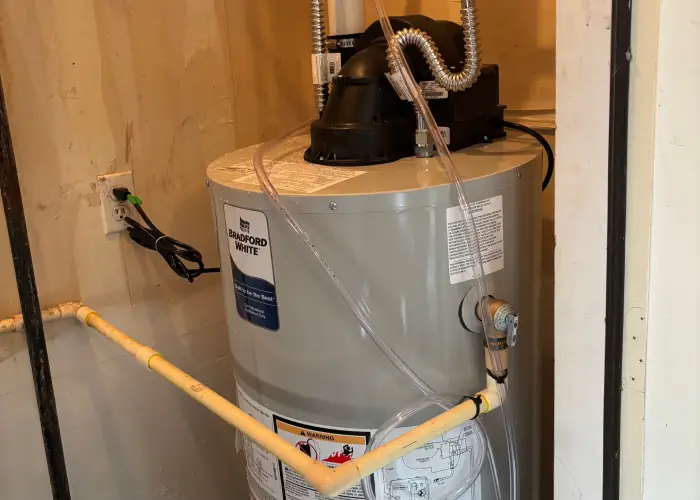
Water Heater Types and Fuel Options for Denver Homes
Three tank water heater types serve residential properties in Denver. Each type has distinct efficiency ratings, installation requirements, and operating costs. The comparison table below shows how fuel type affects performance, venting, and energy cost for Denver homeowners.
Feature | Gas Tank | Electric Tank | Propane Tank |
UEF Range | 0.58 to 0.65 | 0.90 to 0.95 | 0.58 to 0.62 |
Capacity Range | 30 to 75 gallon | 30 to 80 gallon | 30 to 50 gallon |
BTU / Wattage | 36,000 to 50,000 BTU | 4,500W dual element | 36,000 to 40,000 BTU |
Venting Required | Yes (atmospheric, power, or direct) | No | Yes (direct vent) |
Denver Altitude Impact | 20% BTU derating | None | 20% BTU derating |
Recovery Rate (50 gal) | 35 to 45 GPH at altitude | 21 to 25 GPH | 30 to 40 GPH at altitude |
Best For | High demand homes with gas service | Homes without gas, smaller households | Rural homes without gas service |
Gas water heaters recover hot water faster than electric models but require venting and combustion air. Electric water heaters eliminate venting requirements and reach higher UEF ratings, but recovery is slower. At Denver altitude, gas units operate at roughly 80% of rated BTU output, which extends recovery time between draws.
Homeowners considering on demand hot water systems can explore tankless water heater installation in Denver for continuous hot water with zero standby energy loss.

Sizing a Water Heater for Your Denver Home
Two measurements determine the correct water heater size: tank capacity (gallons) and first hour rating (FHR). Tank capacity sets how much hot water the unit stores. First hour rating measures how many gallons the unit delivers in the first hour of use, combining stored water with recovery rate.
| Household Size | Bathrooms | Recommended Capacity | Minimum FHR |
| 1 to 2 people | 1 | 30 to 40 gallon | 40 to 50 gallons |
| 3 to 4 people | 2 | 40 to 50 gallon | 55 to 70 gallons |
| 5 or more people | 3+ | 50 to 75 gallon | 70 to 90 gallons |
Denver altitude reduces gas water heater recovery rates by approximately 20%. A 50 gallon gas unit rated at 45 GPH recovery at sea level delivers approximately 36 GPH at 5,280 feet. This means Denver homes with high simultaneous demand (back to back showers, dishwasher running, laundry) should size up to the next capacity tier or select a unit with higher BTU input to compensate.
Denver Water Heater Installation Requirements
Water heater installation in Denver and surrounding jurisdictions requires a building permit, code compliant connections, and a final inspection. Colorado Plumbing Code and local amendments govern every installation.
Expansion Tank
Closed loop water systems (systems with a backflow preventer or pressure reducing valve) require an expansion tank to absorb thermal expansion. Most Denver metro water systems are closed loop.
TPR Valve Discharge
The temperature and pressure relief valve must discharge through a rigid pipe routed to within 6 inches of the floor or to an exterior wall. The discharge pipe cannot be capped, plugged, or reduced in size.
Combustion Air (Gas Units)
Gas water heaters require adequate combustion air supply. Enclosed spaces must have air intake ducts or openings sized to the BTU input of the unit.
Seismic Strapping.
Colorado code requires water heater strapping in seismic zones. Straps secure the unit to the wall to prevent tipping during seismic activity.
Drain Pan
Water heaters installed above finished living space or on upper floors require a drain pan with a discharge line routed to a drain or exterior.
Benefits of Professional Water Heater Installation
Professional water heater installation protects the investment, ensures code compliance, and optimizes system performance for Denver water and climate conditions.
- Correct Sizing for Denver Altitude. Licensed plumbers calculate first hour rating and recovery rate with altitude derating applied. An undersized unit runs out of hot water during peak demand. An oversized unit wastes energy heating water that sits unused.
- Code Compliant Connections. Permit, expansion tank, TPR valve routing, combustion air, and seismic strapping all meet Colorado Plumbing Code and local amendments. Improper installation creates safety hazards and voids manufacturer warranties.
- Extended Equipment Lifespan. Proper installation includes setting the thermostat to 120F, installing the expansion tank to the correct pre charge pressure, and verifying the anode rod is intact. These steps extend tank life by preventing premature corrosion and pressure stress.
- Lower Energy Bills. Correct fuel type selection, proper venting configuration, and accurate thermostat calibration reduce energy waste. A properly installed high efficiency gas unit (0.65 UEF) uses 10% to 15% less energy than a standard efficiency unit (0.58 UEF).
- Water Damage Prevention. Drain pan installation, secure fitting connections, and post installation leak testing protect floors, walls, and substructures from water damage caused by fitting failures or tank leaks.
- Manufacturer Warranty Protection. Water heater manufacturers require licensed installation to validate the warranty. DIY installation or unlicensed work voids most manufacturer warranties, leaving the homeowner without coverage for defective tanks or components.
Our Water Heater Installation Process
Sewer Lines Plus follows a consistent process on every water heater installation. Our estimators are not paid on commission, and our pricing is transparent with no tricks or hidden charges.
Schedule a no wait appointment
Contact our team by phone or online form. We confirm a specific arrival window so homeowners are not waiting around for a technician.
Receive a free on site evaluation
A licensed plumber evaluates the installation location, measures household demand, assesses fuel type options, and checks gas line capacity and venting. We walk through the findings and answer every question.
Review a detailed written estimate
We present the unit options with capacity, UEF rating, and installed cost. The estimate includes permit fees, old unit disposal, expansion tank, and all connections. No surprises, no pressure.
Old unit removal and new installation
Our plumber disconnects and removes the old water heater for recycling. The new unit is set, connected to water supply, fuel source, and venting, then secured with seismic strapping and fitted with the expansion tank and drain pan.
System testing and inspection scheduling
We fill the tank, purge air from the lines, set the thermostat to 120F, test for leaks at every connection, verify hot water delivery at all fixtures, and schedule the final code inspection.
Why Denver Homeowners Choose Sewer Lines Plus
Our tagline is “ethics matter.” That philosophy shows in how we estimate, install, and follow up on every water heater installation.
Free Estimates and Second Opinions
Every water heater installation begins with a free on site estimate. Homeowners who received a quote from another company receive a free second opinion with a detailed written comparison.
Over 800 Five Star Reviews
Denver metro homeowners have left over 800 verified five star reviews based on transparent pricing, clear communication, and work completed as quoted.
No Pressure Sales
Our estimators are not paid on commission. They evaluate the installation site, assess household demand, provide a detailed estimate, and recommend only necessary work.
Licensed and Fully Insured
Every plumber on our team is licensed and covered by general liability and workman’s compensation insurance. Licensed installation validates the manufacturer warranty.
Clear Communication
We walk through every estimate line by line, explain the sizing decision, and confirm the scope before any work begins. No tricks, no gimmicks, no hidden charges.
Old Unit Disposal Included
We remove and recycle the old water heater as part of every installation. No extra fees, no second appointment.
Water Heater Installation FAQs
How much does water heater installation cost in Denver?
Water heater installation in Denver ranges from $1,100 to $2,500 depending on tank size, fuel type, and installation complexity. Gas units cost more to install than electric due to venting and gas line connections.
How long does water heater installation take?
A standard water heater installation takes 2 to 4 hours. Installations requiring gas line modifications, venting changes, or electrical upgrades take 4 to 6 hours.
Should I choose a gas or electric water heater in Denver?
Gas water heaters recover hot water faster and cost less to operate in Denver. Electric water heaters eliminate venting requirements and reach higher efficiency ratings. The right choice depends on existing infrastructure and household demand.
What size water heater do I need?
A 40 to 50 gallon tank serves most 3 to 4 person Denver households. Homes with 5 or more people or 3 or more bathrooms should consider a 50 to 75 gallon unit. Denver altitude reduces gas recovery rates, so sizing up one tier compensates for the derating.
Does Sewer Lines Plus remove the old water heater?
Yes. Old unit removal and recycling is included in every water heater installation at no additional cost.