
Storm Drain Repair and Installation in Denver, CO
Sewer Lines Plus repairs and installs residential storm drain and yard drainage systems across the Denver metro area. Storm drains, French drains, catch basins, and downspout drainage lines move rainwater and snowmelt away from the foundation before it pools in the yard, seeps into the basement, or erodes the soil around the home.
Denver delivers water to your yard in two distinct seasons. Spring snowmelt runs from March through May, saturating the soil over weeks as accumulated snow melts from the ground up. Summer thunderstorms drop heavy rainfall in short bursts between June and August, overwhelming surface drainage before the soil can absorb the volume. Both patterns push water toward the foundation if the drainage system is missing, undersized, or blocked. Expansive clay soils make the problem worse. Denver’s clay absorbs water, swells, and presses against the foundation wall. When the clay dries, it shrinks and cracks, creating channels for the next round of water to flow directly against the foundation.
Every drainage service begins with a free estimate, transparent pricing, and a written scope of work. Our estimators are not paid on commission and recommend only necessary work.
Signs Your Property Needs Drainage Work
Standing water in the yard after rain
Puddles that remain for more than 24 hours after a rainstorm indicate the yard does not drain properly. The soil is either too flat, too compacted, or too saturated with clay to absorb the runoff.
Water pooling against the foundation
Water collecting at the base of the house after rain or snowmelt is the most damaging drainage failure. Foundation walls absorb moisture through cracks and joints, leading to basement seepage, efflorescence (white mineral deposits on concrete), and eventually structural cracking.
Soggy or spongy yard that never dries
A section of lawn that stays wet days after the rest of the yard has dried indicates a subsurface drainage problem. Groundwater or a failed drain pipe is holding water in the soil.
Erosion channels or washed out mulch beds.
Visible erosion paths across the yard, along the foundation, or through garden beds indicate concentrated water flow that needs to be captured and redirected.
Basement moisture, seepage, or musty odor
Water entering the basement through floor cracks, wall joints, or the cold joint (where the wall meets the floor) is often caused by poor exterior drainage rather than a plumbing leak. The fix starts outside, not inside.
Overflowing gutters dumping water at the foundation
Gutters without proper downspout extensions deposit roof runoff directly at the foundation wall. A 1,000 square foot roof sheds approximately 620 gallons of water per inch of rainfall. Without drainage, all of that water pools at the foundation.
Drainage Solutions for Denver Properties
Five drainage systems address residential stormwater and yard drainage problems. The right solution depends on the water source, the property layout, and the severity of the drainage issue.
Solution | How It Works | Best For |
French Drain | A sloped trench filled with gravel surrounding a perforated pipe. Water enters the gravel, flows into the pipe, and is carried to a discharge point away from the home | Subsurface water near the foundation, high water table areas, soggy yards, and basement seepage prevention |
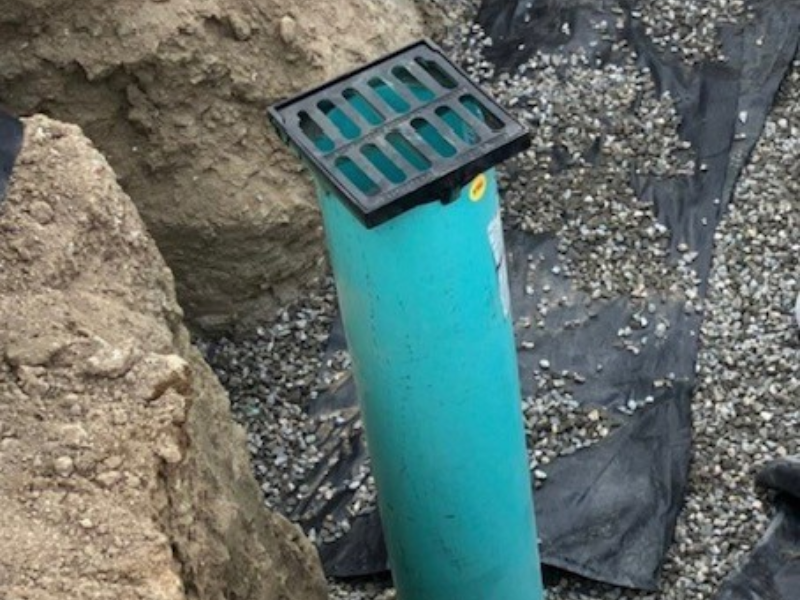
Catch Basin | A box drain set into the ground with a surface grate. Water flows into the grate, collects in the basin, and exits through a solid drain pipe to a discharge point | Low spots in the yard that collect standing water, driveway and patio runoff, and areas where surface water concentrates |
Downspout Drainage | Underground solid drain pipe connected to the downspout that carries roof runoff at least 10 feet from the foundation to a pop up emitter or discharge point | Homes where downspouts dump water at the foundation, causing pooling, erosion, and basement moisture |
Trench Drain (Channel Drain) | A narrow channel with a surface grate set into concrete, pavement, or between pavers. Water enters the channel and flows through a connected drain pipe | Driveway entries, garage aprons, patios, and paved surfaces where water sheet flows toward the home or pools in low spots |
Surface Grading | Reshaping the soil surface to create a slope away from the foundation. The finished grade directs surface water away from the house by gravity | Minor drainage issues where the grade slopes toward the house or has settled over time. Often combined with other solutions |
Most Denver drainage projects combine two or more of these solutions. A French drain along the foundation handles subsurface water while downspout extensions handle roof runoff. A catch basin in the low spot of the yard captures surface water while grading directs it away from the house. Our plumber evaluates the property and recommends the combination that addresses every water entry point.
Denver Soil and Seasonal Drainage Factors
Denver’s drainage challenges are driven by two factors that homeowners in other regions do not face at the same intensity.
Expansive clay soil
Most of the Denver metro area sits on expansive (bentonite) clay. This soil absorbs water and swells by up to 10% to 15% in volume. The swelling pushes against foundation walls and under floor slabs. When the soil dries, it shrinks and separates from the foundation, creating gaps that channel the next round of water directly against the concrete. Effective drainage keeps soil moisture consistent around the foundation, reducing the swell and shrink cycle that causes structural movement.
Two season water delivery
Denver receives moisture in two distinct patterns. Spring snowmelt (March through May) saturates the soil slowly over weeks. Summer thunderstorms (June through August) deliver 1 to 2 inches of rain in 30 to 60 minutes. A drainage system must handle both: the steady saturation from snowmelt and the sudden volume from thunderstorms. Undersized or seasonal solutions that work for one pattern fail during the other.
Benefits of Professional Drainage Installation
- Foundation Protection. Directing water away from the foundation prevents hydrostatic pressure, basement seepage, and the swell and shrink cycle in Denver's expansive clay. Foundation repair costs $5,000 to $15,000 or more. Drainage installation costs a fraction of that and prevents the damage entirely.
- Dry Basement. French drains along the foundation and proper downspout routing intercept water before it reaches the basement wall. Drainage addresses the root cause of basement moisture instead of managing the symptom.
- Usable Yard Space. Eliminating standing water and soggy soil turns unusable sections of the yard into lawn, garden, or play space. A yard that drains properly dries within hours after rain instead of days.
- Erosion Prevention. Catch basins and drain pipes capture and redirect concentrated water flow that washes out mulch, topsoil, and landscaping. Controlled drainage preserves the yard surface.
- Correct Slope and Discharge. Licensed plumbers install drain pipes at the correct slope (minimum 1% grade) and terminate discharge lines at the proper distance from the foundation. Incorrect slope causes standing water in the pipe. Incorrect discharge sends water right back to the house.
Our Storm Drain and Drainage Process
Sewer Lines Plus follows a thorough process on every drainage project. Our estimators are not paid on commission, and our pricing is transparent with no hidden charges.
Schedule a no wait appointment
Contact our team by phone or online form. Describe the problem (standing water, soggy yard, basement moisture, downspout pooling, erosion) so we arrive prepared.
Free on site evaluation
A licensed plumber walks the property, identifies every water entry point, checks the grade around the foundation, inspects existing drainage components, and determines where water needs to go. We explain every finding.
Detailed written estimate
We present the drainage solution: French drain footage, catch basin count, downspout connections, trench drain length, grading scope, and discharge routing. Each item is listed. No pressure, no surprises.
Excavation and installation
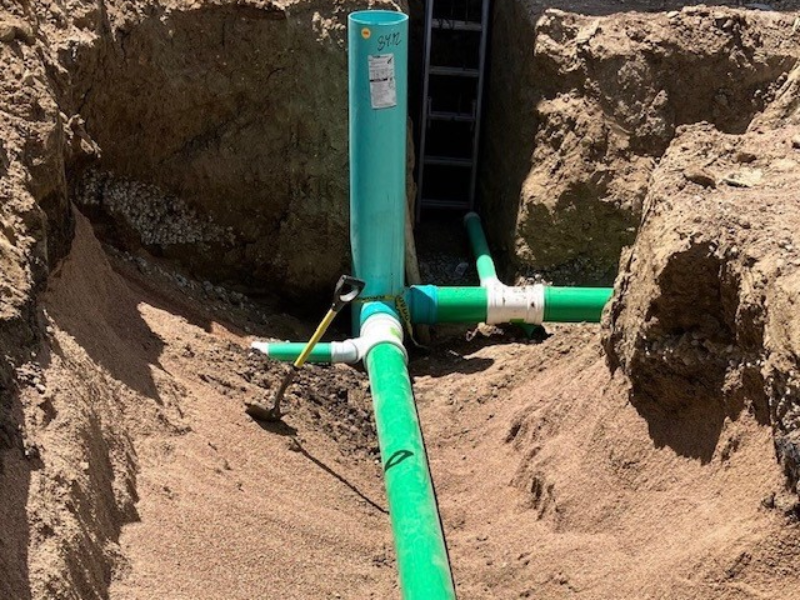
Our crew excavates trenches, sets catch basins, installs perforated and solid drain pipe at the correct slope, backfills with gravel and filter fabric, connects downspouts, and restores the grade.
Testing and restoration
We flood test the system with a garden hose to verify water flows through every drain and discharges at the correct point. We restore the yard surface and confirm the grade slopes away from the foundation.
Why Denver Homeowners Choose Sewer Lines Plus
Our tagline is “ethics matter.” That philosophy shows in how we evaluate, estimate, and complete every drainage project.
Free Estimates and Second Opinions
Every drainage project begins with a free on site evaluation. Homeowners who received a quote from another company receive a free second opinion with a detailed written comparison.
Over 800 Five Star Reviews
Denver metro homeowners have left over 800 verified five star reviews based on transparent pricing, clear communication, and drainage work completed as quoted.
No Pressure Sales
Our estimators are not paid on commission. They walk the property, identify every water entry point, and recommend only the drainage work that addresses the actual problem. If surface grading fixes the issue without a French drain, we say so.
Licensed and Fully Insured
Every plumber on our team is licensed and covered by general liability and workman’s compensation insurance.
Clear Communication
We explain which drainage solution addresses which water source, where the discharge line terminates, and every cost before starting work. No tricks, no gimmicks, no hidden charges.
No Wait Appointments
We schedule specific appointment windows so homeowners are not waiting around for a technician.
Storm Drain and Drainage FAQs
How much does French drain installation cost in Denver?
French drain installation in Denver ranges from $2,500 to $6,000 for a typical residential project, depending on linear footage, trench depth, and discharge routing. Interior French drains (installed inside the basement perimeter) range from $3,000 to $8,000. Exterior French drains along the foundation typically cost $40 to $80 per linear foot.
How much does catch basin installation cost?
A single catch basin with drain pipe and discharge point ranges from $800 to $1,500 installed. Multiple basins connected to a common discharge line range from $1,500 to $4,000 depending on the number of basins and pipe run distance.
What is the difference between a French drain and a catch basin?
A French drain collects subsurface water through a perforated pipe surrounded by gravel. It handles groundwater and slow seepage. A catch basin collects surface water through a grate and sends it through a solid pipe to a discharge point. French drains handle water you cannot see. Catch basins handle water you can see pooling on the surface.
How far should downspouts drain from the foundation?
Downspout discharge should terminate at least 10 feet from the foundation. Underground downspout drain lines carry roof runoff through solid pipe to a pop up emitter or discharge point away from the house. A 1,000 square foot roof sheds approximately 620 gallons per inch of rainfall. Without proper routing, all that water pools at the foundation.
Does Sewer Lines Plus install interior French drains?
Yes. Interior French drains are installed inside the basement perimeter, beneath the slab edge, and connected to a sump pump that discharges the collected water outside the home. Interior drains work with the sump pump to keep the basement dry. Learn more about sump pump installation in Denver.
How often should storm drains and French drains be cleaned?
French drains should be inspected and flushed annually, ideally before Denver’s spring snowmelt season (February or March). Catch basin grates should be cleared of debris after major storms. Storm drain pipes should be camera inspected every 2 to 3 years to check for root intrusion, sediment buildup, or pipe collapse.