
Gas Line Installation and Repair in Denver, CO
Sewer Lines Plus installs, repairs, and extends natural gas lines for residential properties across the Denver metro area. Gas line work is not a DIY project. It requires a licensed plumber, a pressure test on every new connection, and coordination with Xcel Energy when the meter or service line is involved. Incorrect gas line work creates fire risk, explosion risk, and carbon monoxide risk.
Denver homes use natural gas for furnaces, water heaters, stoves, dryers, fireplaces, and outdoor appliances. Extending an existing gas line to a new location, upsizing a line for a replacement appliance, and repairing a leaking connection all fall under gas line service. Some Denver-metro cities now limit permits to replacing an existing gas appliance rather than adding gas service where none existed before, as part of a broader push toward electric appliances. Check with your city’s building department before planning a new gas hookup. Each project requires proper pipe sizing to deliver adequate gas volume at the correct pressure for the appliance’s BTU rating.
Every gas line service begins with a free estimate, transparent pricing, and a written scope of work. Our estimators are not paid on commission and recommend only necessary work.
Gas Line Installation by Appliance
Each gas appliance needs a correctly sized gas line, a dedicated shutoff valve, and a flexible connector from the valve to the appliance. The table below shows what each appliance hookup involves.
Appliance | Typical Line Size | What the Hookup Includes |
Gas Stove / Range | 1/2 inch | Gas line from nearest supply to stove location, shutoff valve behind the range, flexible connector, leak test |
Gas Dryer | 1/2 inch | Gas line to laundry area, shutoff valve accessible behind dryer, flexible connector, leak test |
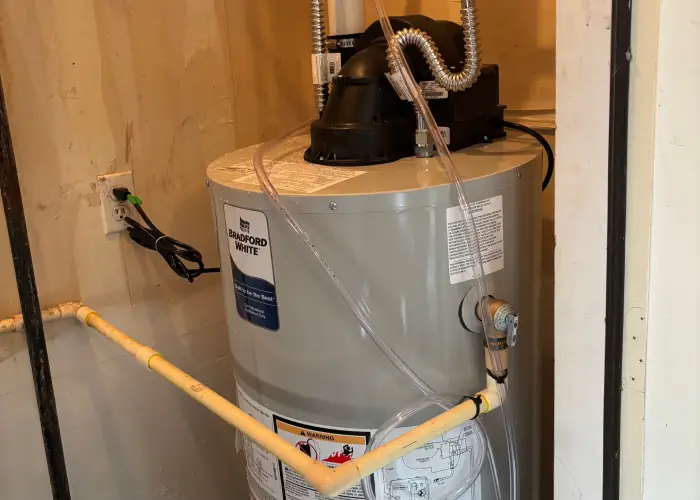
Gas Water Heater | 1/2 inch to 3/4 inch | Gas line from meter or manifold to water heater location, sediment trap (drip leg), shutoff valve, flexible connector, leak test |
Tankless Water Heater | 3/4 inch to 1 inch | Upsized gas line (most tankless units exceed the capacity of existing 1/2 inch lines), shutoff valve, sediment trap, flexible connector, leak test |
Gas Fireplace | 1/2 inch | Gas line routed through wall or floor to fireplace location, shutoff valve, gas key valve or electronic ignition connection, leak test |
Outdoor Fire Pit | 1/2 inch to 3/4 inch | Underground gas line from house to fire pit location, outdoor rated shutoff valve, quick connect fitting, leak test |
Outdoor Grill (Built In) | 1/2 inch | Gas line to outdoor kitchen or grill station, outdoor shutoff valve, quick connect, leak test |
Standby Generator | 3/4 inch to 1 inch | Dedicated gas line from meter to generator pad, shutoff valve, flex connector, transfer switch coordination (electrical by others) |
Fireplace, fire pit, built-in grill, and standby generator hookups are usually new gas appliance additions rather than replacements. Several Denver-metro cities only issue permits for replacing an existing gas appliance in these categories, not for adding gas service where it didn’t exist before. Confirm with your city’s building department before budgeting for one of these installations.
Tankless water heaters require a larger gas line than standard tank water heaters. Most existing 1/2 inch gas lines cannot deliver enough volume for a tankless unit. If you are converting from tank to tankless, the gas line upgrade is part of the installation scope. Learn more about tankless water heater installation in Denver.
Gas Line Pipe Materials
Two pipe materials handle residential gas line installations in Denver. The right material depends on the installation path, code requirements, and whether the line runs inside or outside the home.
- Black Iron Pipe. Threaded steel pipe joined with threaded fittings and pipe compound. Black iron is the traditional gas pipe material and remains the standard for exposed runs, manifolds, and connections inside mechanical rooms. It is rigid, durable, and accepted by all Denver metro jurisdictions. Every joint must be hand threaded and tested for leaks.
- CSST (Corrugated Stainless Steel Tubing). Flexible stainless steel tubing with specialized fittings. CSST routes through walls, floors, and ceilings faster than black iron because it bends around obstacles without joints. Fewer joints means fewer potential leak points. CSST must be properly bonded to the home’s electrical grounding system per manufacturer requirements and local code. Some older Denver homes may need a bonding upgrade when CSST is installed.
Sewer Lines Plus installs both black iron and CSST. The plumber selects the best material based on the installation path, code requirements, and whether the run is exposed or concealed.

Gas Leak Signs and What to Do
Gas leaks are a safety emergency. Knowing the signs and the correct response protects your household.
Rotten egg or sulfur smell
Xcel Energy adds mercaptan (a sulfur compound) to natural gas so leaks are detectable by smell. If you smell rotten eggs near a gas appliance, at the meter, or anywhere in the home, treat it as a leak.
Hissing or blowing sound near a gas line or appliance
A pressurized gas leak produces a hissing sound at the point of escape. This may come from a loose fitting, a corroded pipe section, or a damaged flexible connector.
Dead vegetation near an underground gas line.
A leaking underground gas line displaces oxygen in the soil, killing grass and plants above the leak path. A patch of dead grass in an otherwise healthy yard near the gas line route is a leak indicator.
Higher than expected gas bill
A small leak that does not produce a detectable smell can still waste gas and increase the Xcel Energy bill. A sudden increase without a change in usage warrants a pressure test.
If you suspect a gas leak:
- Do not flip any light switches, use any electrical devices, or create sparks.
- Leave the home immediately. Do not re-enter.
- Call Xcel Energy at 1 800 895 2999 from a safe distance.
- Call Sewer Lines Plus for gas line repair after Xcel confirms the gas supply is safe.
Benefits of Professional Gas Line Installation
- Pressure Tested Connections. Every new gas line connection is pressure tested with air or nitrogen before gas flows through it. The test confirms no leaks exist at any joint, fitting, or valve in the system. Testing is performed at pressures above normal operating pressure to verify integrity under load.
- Correct Pipe Sizing. A licensed plumber sizes the gas line to deliver adequate volume at the correct pressure for the appliance's BTU input. An undersized line starves the appliance of fuel, causing incomplete combustion, soot buildup, and inefficient operation. At Denver altitude (5,280 feet), gas appliances already operate at approximately 80% of rated BTU, making correct pipe sizing even more critical.
- Code Compliance. Gas line installations in Denver require permits, pressure tests, and inspections. Licensed plumbers pull the permit, perform the installation to Colorado code, and schedule the inspection. Unpermitted gas line work creates safety hazards, insurance issues, and home sale complications.
- Carbon Monoxide Prevention. Proper gas line sizing and appliance venting prevent incomplete combustion, which produces carbon monoxide. A licensed plumber verifies combustion air supply and venting on every gas appliance connection.
- Xcel Energy Coordination. New gas service, meter upgrades, and service line extensions require coordination with Xcel Energy. Sewer Lines Plus handles the coordination, scheduling, and paperwork so the homeowner does not have to navigate the utility process.
Our Gas Line Installation and Repair Process
Sewer Lines Plus follows a safety first process on every gas line project. Our estimators are not paid on commission, and our pricing is transparent with no hidden charges.
Schedule a no wait appointment
Contact our team by phone or online form. Describe the project (new appliance hookup, line extension, gas leak) so we arrive prepared.
Free on site evaluation
A licensed plumber inspects the existing gas system, checks the meter capacity, measures the run distance to the new appliance location, and determines the correct pipe size. We explain every finding and answer every question.
Detailed written estimate
We present the scope: pipe material, line routing, shutoff valve, flexible connector, permit fees, and pressure test. Each item is listed. No pressure, no surprises.
Permit and installation
We pull the building permit, install the gas line, mount the shutoff valve and sediment trap (where required), and connect the flexible connector to the appliance.
Pressure test and inspection
We pressure test the entire new gas line with air or nitrogen to confirm zero leaks. The gas is then turned on and every connection is checked with a combustible gas detector. We schedule the final code inspection and confirm the system passes.
Trim out and final testing
After drywall, tile, and finishes are complete, we install the toilet, sink, shower, and any other fixtures. We test every connection for leaks, run the ejector pump through a full cycle, verify drain flow, and schedule the final inspection.
Why Denver Homeowners Choose Sewer Lines Plus
Our tagline is “ethics matter.” That philosophy shows in how we evaluate, estimate, and complete every gas line project.
Free Estimates and Second Opinions
Every gas line project begins with a free on site evaluation. Homeowners who received a quote from another company receive a free second opinion with a detailed written comparison.
Over 800 Five Star Reviews
Denver metro homeowners have left over 800 verified five star reviews based on transparent pricing, clear communication, and gas line work completed as quoted.
No Pressure Sales
Our estimators are not paid on commission. They evaluate the gas system, present the options, and recommend only necessary work. If your existing gas line can support the new appliance without upsizing, we tell you.
Licensed and Fully Insured
Every plumber on our team is licensed and covered by general liability and workman’s compensation insurance. Gas line work requires a licensed plumber by Colorado law.
Clear Communication
We explain the pipe material, the line routing, the pressure test results, and every cost before starting work. No tricks, no gimmicks, no hidden charges.
No Wait Appointments
We schedule specific appointment windows so homeowners are not waiting around for a technician.
Gas Line Installation and Repair FAQs
How much does gas line installation cost in Denver?
Gas line installation in Denver ranges from $300 to $800 for a simple appliance hookup near an existing gas line. Running a new gas line from the meter or manifold ranges from $500 to $2,000 depending on distance and routing complexity. Outdoor gas line installations for fire pits and grills range from $400 to $1,200. Complete home gas system installations or major extensions range from $2,500 to $7,500.
Do I need a permit for gas line installation in Denver?
Yes. Denver, Jefferson County, and Arapahoe County require a plumbing permit for all new gas line installations and modifications. The permit covers the installation, pressure test, and final inspection. Sewer Lines Plus pulls the permit and schedules the inspection as part of every project.
How do I know if I have a gas leak?
Signs include a rotten egg or sulfur smell, a hissing sound near gas lines or appliances, dead vegetation near underground gas lines, and an unexplained increase in the Xcel Energy gas bill. If you suspect a leak, leave the home immediately and call Xcel Energy at 1 800 895 2999. After the area is safe, call Sewer Lines Plus for gas line repair.
Does Sewer Lines Plus install outdoor gas lines for fire pits and grills?
Yes. We install underground gas lines from the home to outdoor fire pits, built in grills, and outdoor kitchens. Outdoor installations include rated shutoff valves, quick connect fittings, and pressure testing. For indoor gas appliance services, learn more about water heater services in Denver.
What is a gas line pressure test?
A pressure test fills the new gas line with air or nitrogen at a pressure higher than normal operating pressure. The plumber monitors the gauge for a set period to confirm zero pressure drop, which verifies no leaks exist at any joint or connection. Every gas line installation includes a pressure test before gas flows through the system.