
Water Pressure Regulator Replacement in Denver, CO
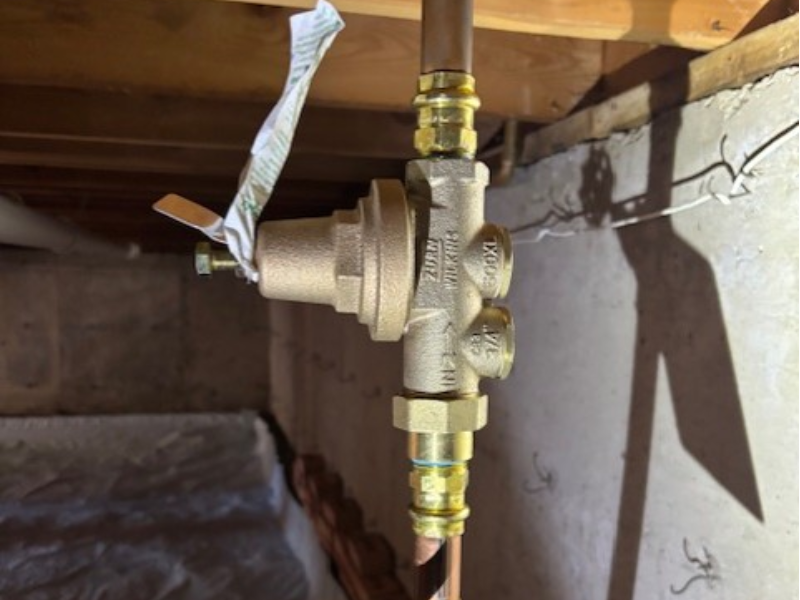
Sewer Lines Plus tests, adjusts, and replaces water pressure regulators for residential properties across the Denver metro area. The water pressure regulator, also called a pressure reducing valve (PRV), is a bell shaped valve installed on the main water supply line where it enters the home. It reduces the high pressure from Denver Water’s municipal supply to a safe operating range for residential plumbing.
Denver Water delivers water at 40 to 100 PSI or higher depending on location and elevation. Homes at lower elevations in the metro area receive higher pressure because gravity and the water distribution system increase pressure as elevation decreases. Colorado Plumbing Code requires a pressure reducing valve when supply pressure exceeds 80 PSI. Without a functioning PRV, uncontrolled pressure damages pipes, fixtures, appliances, and water heaters.
Every PRV service begins with a free estimate, transparent pricing, and a written scope of work. Our estimators are not paid on commission and recommend only necessary replacement or adjustment.
Signs Your Water Pressure Regulator Needs Replacement
A failing PRV produces specific symptoms that indicate the valve is no longer controlling supply pressure. These symptoms affect the entire home because the PRV sits on the main water supply line
Water hammer (banging pipes)
Loud banging or thumping when faucets, toilets, or appliances shut off is one of the most common signs of high water pressure from a failed PRV. The pressure surge from a rapid valve closure creates a shockwave through the supply system.
Dripping faucets and running toilets
High pressure forces water past faucet cartridge seals and toilet fill valve diaphragms. Homeowners replace faucet cartridges and toilet fill valves repeatedly, but the problem returns because the root cause is excessive supply pressure, not the fixture itself.
Frequent fixture and appliance failures
Dishwashers, washing machines, ice makers, and water heaters are designed to operate at 40 to 60 PSI. Sustained pressure above 80 PSI accelerates wear on solenoid valves, supply hoses, internal seals, and heating elements across every water using appliance in the home.
Water heater TPR valve discharging
The temperature and pressure relief valve on the water heater opens when tank pressure exceeds safe limits. A failed PRV allows municipal supply pressure into the water heater, and thermal expansion during heating raises pressure further. This causes the TPR valve to discharge water as a safety measure.
Leaking supply connections
High pressure stresses pipe joints, compression fittings, and braided supply lines throughout the home. Pinhole leaks, weeping fittings, and supply line failures trace back to excessive pressure when the PRV is no longer regulating.
Inconsistent or fluctuating pressure
A PRV with a worn diaphragm or corroded spring delivers pressure that surges and drops unpredictably. Showers that suddenly increase in force or lose pressure during use indicate a PRV that no longer maintains a consistent set point.
Low water pressure throughout the house.
A PRV that has seized closed due to mineral buildup restricts supply flow. Denver hard water at 15 to 20 GPG deposits calcium inside the PRV body and on the diaphragm, eventually restricting or blocking water flow entirely.
How a Water Pressure Regulator Works and What Fails
A PRV contains three primary components: a diaphragm, a spring, and an adjustment screw. Municipal water enters the valve at full supply pressure. The diaphragm opens or closes against the spring to maintain the set outlet pressure. The adjustment screw on top of the valve sets the target pressure (typically 50 to 60 PSI for residential homes).
Three failure modes account for the majority of PRV replacements:
Three failure modes account for the majority of PRV replacements:
Failure Mode | What Happens Inside | Symptom at Fixtures |
Diaphragm deterioration | The rubber diaphragm hardens, cracks, or tears from age and mineral exposure. It no longer modulates against the spring | Pressure surges past the set point; fixtures see 80 to 120+ PSI; water hammer, dripping faucets, TPR discharge |
Spring fatigue | The spring weakens over time and no longer holds the diaphragm at the correct position. Set point drifts upward | Gradual pressure increase; fixtures and appliances fail more frequently as pressure slowly rises |
Mineral seizure | Denver hard water deposits calcium on the diaphragm and inside the valve body. The valve seizes in a partially or fully closed position | Low pressure or no flow throughout the house; adjusting the set screw has no effect |
PRVs are not repairable in most cases. When the diaphragm fails, the spring fatigues, or mineral buildup seizes the valve, full replacement with a new PRV is the standard repair. PRV lifespan in Denver is typically 7 to 12 years depending on water hardness and supply pressure.
Home Water Pressure Test
Homeowners can test their water pressure with a simple gauge available at any hardware store. This test determines whether the PRV is maintaining the correct set point.
Attach a pressure gauge to any exterior hose bib or laundry faucet
Thread the gauge onto the faucet connection with all other fixtures and appliances turned off.
Turn on the faucet fully and read the gauge
The reading shows static water pressure at that location.
Compare the reading to the safe range
Residential water pressure should read between 40 and 60 PSI. Readings above 80 PSI indicate a failed or incorrectly set PRV. Readings below 40 PSI indicate a seized or restricted PRV.
Test at multiple times of day
Municipal pressure fluctuates with demand. Test in the morning (low demand) and evening (high demand) to see if the PRV maintains a consistent set point.
If your reading is outside the 40 to 60 PSI range, or if pressure fluctuates by more than 10 PSI between tests, the PRV should be inspected and likely replaced by a licensed plumber.
PRV Failure and Water Heater Damage
A failed PRV does not just affect faucets and fixtures. It directly impacts the water heater. When the PRV allows supply pressure above 80 PSI into the home, the water heater absorbs that pressure. As the water heater heats water, thermal expansion increases tank pressure further. The expansion tank absorbs this pressure under normal conditions, but excessive supply pressure from a failed PRV overwhelms the expansion tank’s capacity. The result is TPR valve discharge, accelerated tank stress, and shortened water heater lifespan. Learn more about water heater repair and replacement in Denver.
Benefits of PRV Replacement
- Protected Fixtures and Appliances. A properly set PRV at 50 to 60 PSI eliminates the excessive pressure that causes faucet drips, toilet fill valve failures, dishwasher solenoid wear, and supply hose bursts. Fixture and appliance replacement costs drop significantly.
- Eliminated Water Hammer. Reducing supply pressure to the safe range eliminates the pressure surge that causes banging pipes when fixtures and appliances close their valves.
- Extended Water Heater Life. Lower supply pressure reduces thermal expansion stress on the water heater tank, TPR valve, and expansion tank. The water heater operates within its design pressure range, extending lifespan and reducing repair frequency.
- Reduced Water Waste. High pressure forces more water through every fixture. A PRV set to 50 PSI delivers approximately 30% less water per minute than an unregulated supply at 90 PSI. This reduces water consumption and lowers the Denver Water bill.
- Leak Prevention. Lower pressure reduces stress on every pipe joint, compression fitting, and supply connection in the home. Fewer leaks mean less risk of water damage behind walls and under floors.
Our PRV Replacement Process
Sewer Lines Plus follows a thorough process on every PRV service. Our estimators are not paid on commission, and our pricing is transparent with no hidden charges.
Schedule a no wait appointment
Contact our team by phone or online form. Describe the symptoms (banging pipes, dripping faucets, high pressure, low pressure, TPR discharge) so we arrive prepared.
Free on site pressure test and evaluation
A licensed plumber tests static water pressure at multiple points, inspects the existing PRV condition, and checks the expansion tank pressure. We explain every finding clearly.
Detailed written estimate
We present the PRV replacement scope with transparent pricing. If the expansion tank also needs replacement due to prolonged high pressure exposure, that is included. No pressure, no surprises.
Replace the PRV
Our plumber shuts off the water supply, removes the failed PRV, installs the new valve, and sets the outlet pressure to 50 to 60 PSI based on the home's plumbing system and fixture requirements.
Post replacement testing
We test pressure at multiple fixtures, verify the set point holds under static and flowing conditions, check for water hammer elimination, and confirm the expansion tank pre charge matches the new set pressure.
Why Denver Homeowners Choose Sewer Lines Plus
Our tagline is “ethics matter.” That philosophy shows in how we diagnose, estimate, and complete every PRV service.
Free Estimates and Second Opinions
Every PRV service begins with a free on site pressure test and estimate. Homeowners who received a quote from another company receive a free second opinion with a detailed written comparison.
Over 800 Five Star Reviews
Denver metro homeowners have left over 800 verified five star reviews based on transparent pricing, clear communication, and work completed as quoted.
No Pressure Sales
Our estimators are not paid on commission. They test the pressure, inspect the PRV, and recommend only necessary replacement. If an adjustment restores proper pressure, we adjust and confirm rather than pushing a full replacement.
Licensed and Fully Insured
Every plumber on our team is licensed and covered by general liability and workman’s compensation insurance.
Clear Communication
We explain the pressure readings, the PRV condition, and what the replacement involves before starting work. No tricks, no gimmicks, no hidden charges.
No Wait Appointments
We schedule specific appointment windows so homeowners are not waiting around for a technician.
Water Pressure Regulator FAQs
How much does PRV replacement cost in Denver?
Water pressure regulator replacement in Denver ranges from $300 to $600 for a standard residential replacement including the new valve, installation, pressure calibration, and testing. Replacements requiring additional pipe work, relocation, or expansion tank replacement cost $500 to $900.
How long does a water pressure regulator last?
A PRV lasts 7 to 12 years in Denver. Hard water at 15 to 20 GPG shortens PRV lifespan by depositing mineral scale on the diaphragm and inside the valve body. Homes without a water softener experience PRV failure sooner than the 12 year upper range.
What should my home water pressure be?
Residential water pressure should be between 40 and 60 PSI. Colorado Plumbing Code requires a pressure reducing valve when supply pressure exceeds 80 PSI. Homeowners can test their pressure with a gauge attached to any exterior hose bib with all other fixtures turned off.
Can a PRV be adjusted instead of replaced?
If the PRV is functioning but set too high or too low, a licensed plumber can adjust the set screw to change the outlet pressure. If the diaphragm has deteriorated, the spring has fatigued, or the valve is seized from mineral buildup, adjustment will not restore proper function and the PRV must be replaced.
Why does my water heater TPR valve keep releasing water?
A TPR valve that discharges repeatedly indicates excessive pressure inside the water heater. The most common cause is a failed PRV allowing municipal supply pressure above 80 PSI into the home. Thermal expansion during heating raises pressure further, triggering the TPR. PRV replacement resolves the root cause. Learn more about water heater maintenance and flushing in Denver.
Does Sewer Lines Plus test water pressure for free?
Yes. Every PRV service includes a free on site pressure test and written evaluation. We test static pressure at multiple fixtures and check the expansion tank condition as part of the assessment.
Schedule PRV Replacement in Denver, CO
Contact Sewer Lines Plus to schedule a no wait appointment for water pressure regulator testing and replacement. Call [phone number] or complete our online form to receive a free estimate with transparent pricing, no pressure sales, and licensed service backed by over 800 five star reviews. For other water line services, learn more about water line services in Denver.